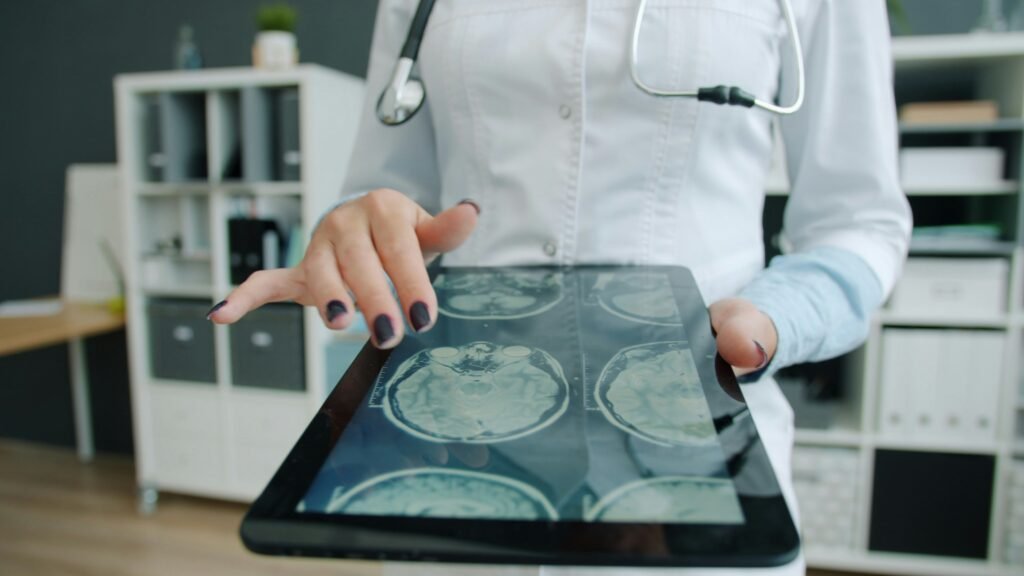

AI in Healthcare: How Artificial Intelligence Is Transforming Modern Medicine
Artificial Intelligence (AI) is transforming healthcare by changing how medical professionals diagnose diseases, monitor patients, develop treatments, manage hospitals, and deliver medical services. Healthcare has traditionally depended on medical knowledge, professional experience, laboratory testing, and physical examinations. Although these methods remain essential, modern technology is creating new opportunities to improve medical services and make healthcare more efficient. Artificial intelligence is becoming an important part of this transformation because it can analyze large amounts of medical information, recognize patterns, and assist healthcare professionals with complex tasks.
From identifying unusual patterns in medical images to helping researchers discover potential medicines, AI is being used across many areas of modern healthcare. Hospitals can use intelligent software to organize patient records, medical laboratories can automate certain analysis processes, and doctors can use AI-powered systems to support clinical decisions. Patients may also benefit from digital health applications that help them understand general health information, monitor certain measurements, and communicate with healthcare providers.
The growing use of AI in healthcare does not mean that machines will replace doctors, nurses, or other medical professionals. Instead, artificial intelligence is designed to support medical teams by reducing repetitive work, providing additional information, and helping professionals make better-informed decisions. Human experience, medical judgment, empathy, and responsibility remain essential parts of healthcare.
As AI technology continues to develop, its role in healthcare is expected to expand. Understanding how artificial intelligence works in medicine, where it is being used, and what challenges it creates is important for patients, healthcare professionals, hospitals, and researchers.
What Is Artificial Intelligence in Healthcare?
Artificial intelligence in healthcare refers to the use of computer systems and intelligent software to perform or support tasks that traditionally require human intelligence. These tasks may include analyzing medical information, recognizing patterns in diagnostic images, predicting certain health risks, organizing patient records, and assisting with treatment planning.
AI systems use different technologies, including machine learning, deep learning, natural language processing, and computer vision. These technologies allow computers to process different forms of medical information and identify relationships that may be useful in clinical or administrative settings.
For example, a machine learning system can be trained using medical images that have been reviewed by qualified specialists. After analyzing many examples, the system may learn to identify patterns associated with certain abnormalities. When presented with a new image, it can highlight areas that deserve further examination.
Natural language processing can help computers understand and organize medical text. Hospitals generate large amounts of written information through patient records, clinical notes, medical reports, and administrative documents. AI-powered systems can assist with extracting relevant details and organizing information for healthcare professionals.
Generative AI introduces additional possibilities. These systems can summarize medical documents, draft administrative communications, and help professionals organize information. However, generated medical content must be checked carefully because AI systems can produce inaccurate or incomplete statements.
Artificial intelligence in healthcare is therefore not a single technology. It is a collection of tools and methods designed to improve different parts of the healthcare system.
How AI Works in the Healthcare Industry
Artificial intelligence works in healthcare by processing information and using mathematical models to identify patterns, make predictions, or generate useful outputs.
Medical data is one of the most important elements of healthcare AI. This information may include medical images, laboratory results, patient histories, electronic health records, genetic information, and measurements collected through medical devices.
Machine learning models analyze this information during training. They identify relationships between different data points and adjust their internal parameters to improve performance.
For example, researchers may train an AI model using thousands of medical images that have been reviewed and labeled by specialists. The model learns patterns associated with particular findings. When it receives a new image, it can analyze the visual information and produce a prediction or highlight areas for professional review.
Deep learning is particularly important for medical image analysis. It uses artificial neural networks with multiple processing layers to recognize complex visual patterns.
Natural language processing is useful for analyzing medical documents. It can help identify relevant information in clinical notes, organize records, and summarize lengthy documents.
Predictive analytics allows healthcare organizations to analyze historical and current information to estimate possible future outcomes. Hospitals may use predictive models to support patient monitoring, resource planning, and certain risk assessments.
However, the quality of AI results depends on several factors, including the accuracy of training data, model design, clinical testing, and the environment in which the system is used. An AI system should not be trusted simply because it produces a confident-looking answer. It must be properly evaluated before being used in important medical activities.
AI in Medical Diagnosis
Medical diagnosis is one of the most important applications of artificial intelligence. Diagnosing diseases can involve examining symptoms, reviewing medical histories, analyzing laboratory results, and interpreting medical images. These activities require extensive medical knowledge and professional experience.
AI-powered systems can help healthcare professionals analyze information and identify patterns that may require additional attention.
For example, an AI system designed for medical imaging may analyze an X-ray and highlight areas that could indicate an abnormality. A radiologist can review the highlighted regions, compare them with other clinical information, and determine whether further investigation is necessary.
AI can also support the analysis of certain laboratory results. By examining multiple measurements together, a system may identify patterns that are difficult to recognize through manual review alone.
In some specialized applications, AI models can assist with identifying patterns associated with eye diseases, certain cancers, cardiovascular conditions, and other medical problems.
Early detection is particularly important because some diseases become more difficult to manage when they are discovered at advanced stages. AI systems may help prioritize examinations and support the review of large volumes of diagnostic information.
However, AI-generated diagnostic predictions are not equivalent to confirmed medical diagnoses. A qualified healthcare professional must consider the patient’s symptoms, examination findings, medical history, and appropriate testing before reaching a clinical conclusion.
AI in Medical Imaging
Medical imaging is one of the most developed areas of healthcare artificial intelligence. Doctors use imaging technologies such as X-rays, CT scans, MRI scans, and ultrasound to examine internal structures and identify possible medical conditions.
Reviewing medical images can be time-consuming, particularly in hospitals that process large numbers of examinations. AI-powered image analysis systems can assist specialists by examining images and identifying patterns that may deserve closer attention.
Deep learning models are especially useful in this area because they can learn visual patterns from large collections of medical images.
In radiology, AI tools may help identify possible abnormalities, measure certain structures, and organize images according to their characteristics. These systems can support the work of radiologists by drawing attention to findings that may require review.
In ophthalmology, specialized AI applications can analyze retinal images and help identify patterns associated with certain eye conditions. Such systems may support screening programs, particularly where access to specialist services is limited.
AI can also assist with analyzing certain types of pathology images. Digital pathology systems may use image recognition models to help identify cellular patterns and organize information for specialist examination.
These technologies can improve workflow efficiency and provide additional analytical support. However, image quality, patient differences, and unusual findings can affect AI performance. Human specialists remain responsible for interpreting results and determining appropriate medical actions.
AI in Early Disease Detection
Early disease detection can improve opportunities for treatment and disease management. Artificial intelligence may support this process by analyzing medical information and identifying patterns associated with potential health risks.
Traditional screening methods often involve specific tests and professional examinations. AI can provide additional analytical capabilities by processing different types of information and highlighting patterns that may deserve investigation.
For example, an AI system may analyze certain medical images and identify unusual features that could require further evaluation. Another system may examine a combination of patient measurements and medical history to estimate whether additional screening could be appropriate.
In cardiovascular healthcare, predictive models may analyze selected patient information to help professionals assess certain risk factors.
In cancer research and screening, AI-powered image analysis may help identify suspicious patterns in mammograms, pathology images, and other diagnostic examinations.
AI may also support the monitoring of chronic conditions by identifying changes in measurements collected over time.
However, early detection systems must be evaluated carefully. An inaccurate prediction may cause unnecessary anxiety or delay appropriate medical attention if users misunderstand the result. AI screening tools should operate within clinically validated processes and appropriate medical supervision.
AI in Personalized Medicine
Personalized medicine is an important area where artificial intelligence may have a major impact. Traditional medical treatment often follows established guidelines, but patients can respond differently to the same treatment.
Differences in genetics, medical history, age, lifestyle, and other factors can influence how people respond to medications and medical procedures.
AI systems can help researchers and healthcare professionals analyze large amounts of information to identify patterns associated with different treatment outcomes.
For example, researchers may use machine learning to study relationships between genetic information, disease characteristics, and treatment responses. These findings could help identify groups of patients who may respond differently to particular therapies.
AI may also support the development of personalized treatment plans by helping professionals organize relevant information and compare possible approaches.
In cancer care, researchers are exploring how AI can assist with analyzing tumor characteristics and identifying patterns that may support treatment planning.
Personalized medicine does not mean that AI independently chooses treatments for patients. Medical decisions require qualified professionals who understand the patient’s complete circumstances and the available clinical evidence.
As medical research advances, AI may help make treatment planning more informed and better adapted to individual patient needs.
AI in Drug Discovery and Development
Developing new medicines is a complicated process that can require years of scientific research, testing, and evaluation. Researchers must identify promising compounds, understand their biological effects, examine potential safety concerns, and conduct clinical trials.
Artificial intelligence is helping researchers analyze scientific information and explore potential drug candidates.
Traditional drug discovery involves examining many chemical compounds and studying how they may interact with biological targets. AI models can analyze molecular structures, predict certain chemical properties, and help researchers prioritize promising candidates for further investigation.
Machine learning can also assist with analyzing scientific publications, biological datasets, and experimental results.
In some research applications, AI models can help identify potential relationships between diseases, biological pathways, and existing medicines. This may provide researchers with additional ideas for investigating new treatment possibilities.
Generative AI is also being explored for designing or suggesting new molecular structures with desired characteristics.
Another important application involves improving the organization of clinical research. AI can help researchers analyze trial information, identify patterns in collected data, and support certain administrative activities.
However, an AI-generated drug candidate is not automatically a safe or effective medicine. Every potential treatment must undergo appropriate laboratory studies, clinical trials, regulatory review, and safety evaluation before it can be approved for use.
AI in Robotic Surgery
Robotic surgery is another area where artificial intelligence and advanced technology are influencing healthcare.
Modern surgical robotic systems can provide surgeons with enhanced control, precision, and visualization during certain procedures. These systems are generally operated by trained medical professionals rather than functioning independently.
AI-related technologies may support surgical planning, image analysis, instrument tracking, and the interpretation of information collected during procedures.
Computer vision systems can analyze surgical video and identify certain anatomical structures. This information may help surgical teams understand the operating environment.
Robotic systems can also support precise instrument movement under the surgeon’s control. Depending on the system, this may help perform complex movements in restricted surgical spaces.
In the future, more advanced AI-assisted surgical systems may provide additional guidance and help surgeons monitor certain aspects of procedures.
However, surgery involves complex physical and medical decisions. Patient anatomy, unexpected complications, and changing conditions require professional judgment and the ability to respond immediately.
Artificial intelligence should therefore be viewed as a supporting technology in surgery, not a replacement for trained surgeons and qualified surgical teams.
AI in Patient Monitoring
Patient monitoring is an important part of healthcare, particularly for people with chronic conditions, elderly patients, and individuals recovering from medical procedures.
Artificial intelligence can help analyze information collected through medical devices, wearable technology, and hospital monitoring equipment.
Some smartwatches and health devices can collect measurements such as heart rate, physical activity, and sleep patterns. AI-powered applications may analyze changes in these measurements and provide general notifications or insights.
In hospitals, monitoring systems can analyze patient measurements collected through compatible medical equipment. Depending on the application, AI may help identify unusual patterns that require clinical review.
Remote patient monitoring is another important area. Patients may use approved devices to share selected health measurements with healthcare providers without visiting a hospital for every routine check.
AI can help organize these measurements and highlight changes that healthcare professionals may want to investigate.
For example, a monitoring system may identify a pattern of changing measurements in a patient with a chronic condition. This information can help a healthcare professional decide whether further evaluation is appropriate.
However, wearable devices and automated monitoring applications are not substitutes for medical examinations. Measurements can be inaccurate, and unusual readings do not always indicate a serious health problem.
AI in Hospital Management
Hospitals manage complicated operations involving patients, healthcare professionals, medical equipment, appointments, supplies, and administrative records.
Artificial intelligence can help hospitals organize these activities and improve operational efficiency.
One important application is appointment scheduling. AI-powered systems can analyze appointment information and help healthcare organizations organize available time slots.
Hospitals may also use predictive models to estimate patient demand and plan staffing requirements. These systems can analyze historical activity and other operational information to support resource planning.
Inventory management is another useful application. Hospitals need to maintain appropriate supplies of medicines, medical equipment, protective materials, and other essential products. AI may help estimate demand and identify potential shortages.
Administrative departments can use AI to process documents, organize records, and support routine communication.
AI-powered systems may also help hospital administrators identify operational patterns, such as delays in patient processing or inefficient resource allocation.
These applications can reduce certain administrative burdens and allow healthcare professionals to spend more time on patient care.
Nevertheless, hospitals must ensure that AI systems integrate properly with existing software and protect confidential patient information.
AI in Electronic Health Records
Electronic Health Records, commonly known as EHRs, are digital systems used to store and manage patient information.
They may contain medical histories, diagnoses, laboratory results, medication information, clinical notes, and other healthcare records.
Artificial intelligence can help healthcare professionals organize and analyze information within these systems.
Natural language processing can identify important details in medical documents and convert certain unstructured information into organized data.
Generative AI tools may also assist with summarizing patient histories, preparing draft clinical notes, and organizing information for professional review.
For example, a doctor preparing for an appointment may need to review several previous medical documents. An AI-powered system could produce a summary of relevant information, allowing the doctor to locate important details more efficiently.
AI can also help identify missing information, organize documentation, and support administrative workflows.
However, medical records must remain accurate and complete. AI-generated summaries can omit important details or misunderstand clinical terminology. Healthcare professionals must review documentation before using it for clinical purposes.
Strong access controls, encryption, and privacy policies are also necessary to protect sensitive medical information.
AI in Mental Healthcare
Artificial intelligence is creating new possibilities in mental healthcare by supporting access to general information, digital wellness services, and certain administrative processes.
Mental healthcare often involves communication, professional assessment, emotional understanding, and ongoing support. Access to qualified mental health professionals can be limited in some communities, making digital tools an area of growing interest.
AI-powered applications may provide guided exercises, help users organize their thoughts, and offer general educational information about stress management and emotional well-being.
Some systems can analyze written or spoken language to identify patterns that may suggest a person is experiencing emotional distress. Such systems should be used cautiously because language alone cannot establish a mental health diagnosis.
AI may also support mental healthcare professionals by helping organize patient notes, summarize questionnaires, and manage administrative work.
However, AI chatbots cannot fully replace human therapists, psychologists, or psychiatrists. Mental health care often requires empathy, professional judgment, clinical assessment, and an understanding of personal circumstances.
People experiencing serious emotional distress or mental health difficulties should have access to qualified human support.
AI in Remote Healthcare and Telemedicine
Telemedicine allows patients to communicate with healthcare professionals through digital platforms instead of always visiting medical facilities in person.
Artificial intelligence can improve certain parts of telemedicine by supporting appointment management, organizing patient information, and helping healthcare professionals review information before consultations.
AI-powered systems may assist with preparing summaries of patient-reported symptoms and organizing relevant medical history.
Some remote monitoring platforms can also analyze measurements collected through compatible devices and share relevant information with healthcare providers.
Language translation and speech recognition can help patients communicate more effectively during digital consultations.
These technologies may be particularly valuable for people living in rural communities or areas where medical specialists are not easily accessible.
However, telemedicine has limitations. Some conditions require physical examinations, laboratory tests, imaging, or emergency treatment that cannot be provided through a digital consultation alone.
AI should therefore support telemedicine rather than create the impression that every medical problem can be safely managed remotely.
Benefits of Artificial Intelligence in Healthcare
Artificial intelligence offers several important benefits that can improve healthcare operations and support better medical services.
One major advantage is the ability to process large amounts of information quickly. Medical professionals often work with extensive records, diagnostic images, and laboratory results. AI systems can help analyze this information and identify patterns that may deserve attention.
Another benefit is improved workflow efficiency. AI can assist with repetitive administrative activities, including document organization, appointment scheduling, and routine data processing. This may reduce the time healthcare workers spend on certain nonclinical tasks.
AI can also support diagnostic workflows by highlighting possible abnormalities in medical images and other information. This additional support may help professionals prioritize examinations and investigate findings.
Personalized analysis is another potential advantage. AI can help researchers study how different patient characteristics relate to treatment outcomes.
Healthcare organizations may also benefit from better resource planning. Predictive models can help hospitals estimate demand for beds, equipment, and staff.
AI-powered translation, captions, and accessibility tools can make healthcare information easier to understand for people with different communication needs.
Furthermore, AI may accelerate medical research by helping scientists analyze complex datasets and explore potential treatment opportunities.
Although these benefits are significant, they depend on reliable systems, appropriate training data, clinical evaluation, and responsible implementation.
Challenges and Risks of AI in Healthcare
Despite its potential, artificial intelligence introduces important challenges that healthcare organizations must address.
One major concern is accuracy. AI systems can produce incorrect predictions or fail to identify important medical findings. If a system is not properly tested, its errors may affect clinical decisions.
Data privacy is another serious issue. Healthcare records contain highly sensitive personal information, and unauthorized access could create significant harm.
AI models can also inherit biases from their training data. If a system is trained using information that does not adequately represent different patient populations, its performance may vary between groups.
Another challenge is transparency. Some advanced AI models operate in ways that are difficult for users to interpret. Healthcare professionals need to understand the limitations of systems that influence medical decisions.
Integration can also be difficult. Hospitals may use different software systems, medical devices, and record formats. Connecting AI tools with existing infrastructure can require significant technical work.
Cost is another consideration. Developing, purchasing, maintaining, and evaluating healthcare AI systems can require substantial investment.
There is also a risk of overdependence. Medical professionals must not accept AI recommendations without applying their own expertise and considering the patient’s circumstances.
These challenges demonstrate why healthcare AI requires careful testing, continuous monitoring, strong security, and clear human responsibility.
Data Privacy and Security in Healthcare AI
Data privacy is one of the most important requirements for artificial intelligence in healthcare.
Medical information can include personal identities, diagnoses, treatment histories, laboratory results, genetic details, and other confidential information. Healthcare organizations must protect this data throughout its collection, storage, processing, and sharing.
AI systems often require access to medical information to perform their intended functions. This creates a responsibility to ensure that data is used only for authorized purposes.
Hospitals and technology providers should implement strong authentication, encryption, access controls, and secure storage practices.
Organizations should also limit access to sensitive information according to professional responsibilities. Not every employee or software application needs access to every patient record.
Another important consideration is the use of patient data for AI training. Organizations must follow applicable privacy laws, consent requirements, and ethical standards when using medical information for research and model development.
Healthcare professionals and patients should understand how AI applications handle sensitive information.
Strong cybersecurity practices are essential because healthcare systems can become targets for cyberattacks. A security failure may expose private information or interrupt important medical services.
The Role of Doctors and Healthcare Professionals in an AI-Powered Future
As artificial intelligence becomes more common in healthcare, the responsibilities of doctors and other medical professionals will continue to evolve.
AI can help analyze medical information, identify patterns, and organize documentation, but healthcare professionals remain responsible for understanding the complete clinical situation.
Doctors must consider symptoms, physical examinations, medical histories, test results, patient preferences, and available clinical evidence when making decisions.
Nurses provide essential patient care, communication, monitoring, and support that cannot be reduced to data processing alone.
Pharmacists contribute expertise in medication safety, drug interactions, and treatment management.
Medical researchers evaluate scientific evidence and investigate new treatment possibilities.
AI can support all these professionals by reducing certain repetitive activities and providing additional analytical information.
Healthcare workers will also need new skills. Understanding AI capabilities, recognizing limitations, reviewing automated results, and protecting patient information will become increasingly important.
The future of healthcare is therefore likely to involve collaboration between human professionals and intelligent technologies.
The Future of AI in Healthcare
The future of artificial intelligence in healthcare is expected to involve more advanced diagnostic support, personalized treatment research, intelligent monitoring, and automated administrative processes.
Medical AI models may become better at combining different types of information, including images, laboratory results, clinical documents, and selected patient measurements.
This could help healthcare professionals develop a more complete view of a patient’s medical situation.
AI agents may also become more common in healthcare administration. With appropriate permissions, they could assist with organizing appointments, preparing documents, coordinating routine workflows, and managing selected administrative tasks.
Robotics may continue to improve through better computer vision, movement control, and intelligent assistance. These developments could support surgical teams, rehabilitation services, and hospital logistics.
Drug discovery may also benefit from more advanced computational models capable of exploring molecular structures and analyzing biological information.
Remote healthcare could become more sophisticated as wearable devices and connected medical equipment improve their ability to collect and share relevant measurements.
However, future progress will require more than technological innovation. Healthcare organizations will need strong regulations, clinical validation, privacy protections, and systems that clearly define human responsibility.
The most successful healthcare AI technologies will be those that improve patient care while maintaining safety, fairness, and trust.
AI in Healthcare in Developing Countries
Artificial intelligence may provide important opportunities for healthcare systems in developing countries, where medical resources and specialist services can be limited.
Some communities face challenges such as shortages of doctors, long travel distances, limited diagnostic facilities, and overcrowded hospitals.
AI-powered technologies may help address selected problems by supporting medical screening, organizing healthcare information, and improving access to general health education.
For example, digital health applications may help people understand basic medical information and identify when professional evaluation is appropriate.
AI-assisted image analysis may support screening programs when qualified professionals are available to review the results.
Telemedicine platforms combined with AI-powered translation and document processing may also help connect patients with healthcare providers.
Hospitals may use AI to improve inventory planning, manage patient appointments, and organize administrative information.
However, developing countries may face challenges involving internet access, electricity, technical infrastructure, healthcare data quality, and the availability of trained professionals.
AI systems designed for one population may not perform equally well in another population. Medical models must therefore be evaluated using appropriate local data and clinical conditions.
For countries such as Pakistan, responsible AI adoption could create opportunities to improve healthcare accessibility and operational efficiency. However, investment in medical infrastructure, professional training, privacy protection, and reliable healthcare services remains essential.
How Patients Can Benefit From AI in Healthcare
Patients may benefit from artificial intelligence in several ways, particularly when AI tools are integrated into properly managed healthcare services.
Digital health applications can help people organize appointments, access medical information, and manage certain health records.
Some wearable devices can monitor selected measurements and provide general information about activity, sleep, and other health-related patterns.
AI-powered translation tools may help patients communicate with healthcare professionals when language differences create difficulties.
Medical imaging systems may support specialists by highlighting findings that deserve additional review.
Administrative automation may also reduce certain delays in scheduling and documentation.
Patients may use general AI assistants to prepare questions before medical appointments or understand common medical terminology. However, they should not rely on these tools to diagnose diseases or recommend treatment without professional evaluation.
The most important benefit will come when AI improves the quality and accessibility of medical services while keeping patients and qualified healthcare professionals at the center of care.
Conclusion
Artificial intelligence is transforming healthcare by improving how medical information is analyzed, supporting diagnostic processes, assisting medical research, and making hospital operations more efficient. From medical imaging and early disease detection to personalized medicine, robotic surgery, remote monitoring, and drug discovery, AI is creating new opportunities across the healthcare industry.
Its ability to process large amounts of information can help healthcare professionals identify patterns, organize records, and support important decisions. Hospitals may also use AI to improve scheduling, inventory management, and administrative workflows.
At the same time, healthcare AI introduces serious challenges involving accuracy, privacy, security, bias, cost, and accountability. Medical information is highly sensitive, and incorrect AI predictions can have important consequences. These risks make clinical testing, responsible development, and human oversight essential.
Artificial intelligence should not replace the knowledge, experience, and compassion of doctors, nurses, and other healthcare professionals. Instead, it should serve as a supporting technology that allows medical teams to work more efficiently and provide better-informed care.
As AI continues to advance, its role in healthcare will likely expand. The future of medicine will increasingly involve collaboration between intelligent technology and human expertise, with the shared goal of improving patient outcomes, expanding access to healthcare, and making medical services more effective and reliable.