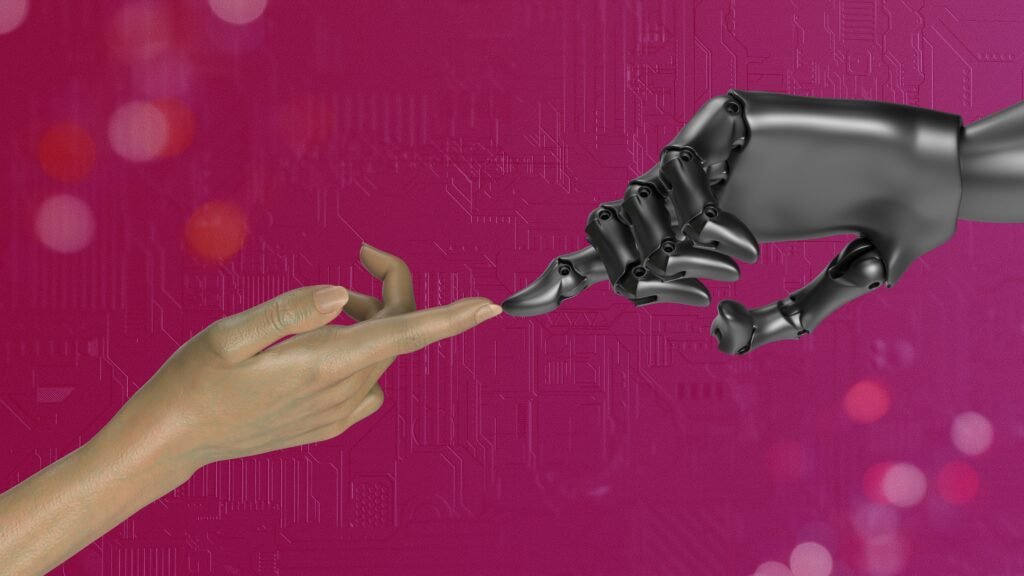

The Future of Artificial Intelligence
Artificial Intelligence (AI) is becoming one of the most influential technologies of the modern era. It is changing how people work, communicate, learn, conduct business, and interact with the world around them. From intelligent virtual assistants and automated customer service to advanced robotics and scientific research, artificial intelligence is already transforming many industries. However, the technology is still developing, and its future could bring changes that are much greater than what people experience today.
The future of artificial intelligence will not simply involve making computers faster or creating more advanced software. It will involve developing systems that can understand complex information, solve problems, work with different types of data, and assist people with increasingly complicated tasks. AI may become a regular part of healthcare, education, transportation, manufacturing, finance, entertainment, and everyday household activities.
Businesses are already investing in artificial intelligence to improve productivity and reduce operational costs. Researchers are exploring how AI can help discover new medicines, understand complicated scientific problems, and develop innovative technologies. At the same time, governments, organizations, and technology experts are discussing important questions about privacy, security, employment, fairness, and responsible AI development.
As artificial intelligence becomes more powerful, understanding its future will become increasingly important. Individuals will need to learn how to use AI effectively, businesses will need to adapt their operations, and educational institutions will need to prepare students for a technology-driven economy.
How Artificial Intelligence Is Expected to Evolve
Artificial intelligence has developed significantly over the past several decades. Early AI systems were generally designed to solve specific problems using predefined rules and limited computational capabilities. Modern AI systems can perform much more complicated activities, including recognizing images, understanding language, generating content, analyzing large datasets, and assisting with software development.
One of the most important developments is the improvement of machine learning models. These systems can identify patterns from data and use those patterns to generate predictions or recommendations. As training methods, computing resources, and model architectures improve, AI applications may become more capable of handling complex tasks.
Another important development is generative AI. These systems can create text, images, audio, video, and computer code based on user instructions. Future generative models may become more accurate, consistent, and useful for professional applications.
Artificial intelligence is also becoming more multimodal. Instead of working only with text or images, advanced systems can process multiple types of information together. A future AI assistant may be able to analyze a document, interpret a photograph, understand spoken instructions, and provide a detailed response within the same interaction.
The development of AI agents is another important direction. These systems are designed to perform sequences of tasks rather than simply answering individual questions. With appropriate permissions, an AI agent may organize files, prepare reports, interact with applications, and complete routine digital workflows.
These developments suggest that artificial intelligence will increasingly move from being a tool that responds to individual instructions toward becoming a more active assistant in different areas of life and business.
The Future of Artificial Intelligence in Healthcare
Healthcare is expected to remain one of the most important areas of AI development. Medical professionals work with enormous amounts of information, and artificial intelligence can help analyze that information more efficiently.
In the future, AI-powered medical systems may become more advanced at examining medical images, identifying unusual patterns, and supporting clinical research. These technologies could help doctors review X-rays, CT scans, MRI images, and other medical information.
AI may also contribute to personalized medicine. Different patients can respond differently to the same treatment because of their medical histories, genetics, lifestyles, and other factors. Advanced AI systems may help researchers analyze these differences and identify treatment approaches that are more suitable for individual patients.
Another important area is early disease detection. AI models may analyze certain medical measurements and patient information to identify patterns associated with potential health problems. These systems could help healthcare professionals decide when additional testing or medical evaluation may be appropriate.
Wearable technology may also become more intelligent. Smartwatches and other compatible devices already collect information about physical activity, heart rate, and sleep patterns. Future systems may analyze these measurements more effectively and help users recognize changes that deserve attention.
Artificial intelligence may also accelerate drug discovery. Developing medicines is often expensive and time-consuming. AI can help researchers analyze molecular structures, identify potential drug candidates, and explore possible biological interactions.
Hospitals may increasingly use AI to improve appointment scheduling, patient record management, administrative processes, and resource planning.
However, the future of healthcare AI will require strict attention to privacy, accuracy, safety, and professional oversight. Artificial intelligence should support medical professionals rather than independently replace their judgment and responsibility.
The Future of AI in Education
Education is another industry that may experience major changes as artificial intelligence advances. Traditional educational systems often follow standardized teaching methods, but students have different abilities, interests, and learning speeds.
AI-powered educational platforms may provide more personalized learning experiences. These systems could analyze student performance, identify areas of difficulty, and adjust lessons according to individual progress.
For example, a student learning mathematics may receive additional explanations and practice exercises when struggling with a particular topic. Another student who understands the material quickly may receive more challenging activities.
Future AI tutors may become more interactive and capable of explaining complicated subjects through different methods. Students could ask questions using natural language, receive step-by-step explanations, and practice their knowledge through personalized exercises.
Language learning may also improve through AI. Intelligent applications could provide pronunciation feedback, correct grammar mistakes, explain vocabulary, and simulate conversations in different languages.
Teachers may use AI to prepare educational materials, develop assessments, organize classroom activities, and understand student performance. This could reduce administrative work and provide teachers with more time to focus on individual students.
AI may also improve educational accessibility. Automatic captions, speech recognition, text-to-speech systems, and translation technologies can help students overcome different communication and learning barriers.
However, the increasing use of AI in education will create new challenges. Students may become overly dependent on automated answers instead of developing independent thinking skills. Schools and universities will need to teach students how to use AI responsibly, evaluate information, and understand the difference between assistance and genuine learning.
The future of education will likely involve cooperation between teachers, students, and AI-powered learning tools rather than completely replacing human educators.
Artificial General Intelligence and the Possibility of More Advanced AI
One of the most widely discussed topics concerning the future of artificial intelligence is Artificial General Intelligence, commonly known as AGI.
Most AI systems currently available are designed to perform specific tasks or groups of related tasks. They can write content, recognize images, translate languages, analyze information, and assist with programming. However, their abilities remain limited by their design, training, and operating environment.
Artificial General Intelligence describes a hypothetical form of AI capable of performing a broad range of intellectual tasks at a level comparable to human intelligence. An AGI system would ideally be able to learn unfamiliar subjects, adapt to new situations, transfer knowledge between different areas, and solve problems without requiring separate specialized development for every task.
For example, a general AI system might learn a new scientific concept, apply it to an engineering challenge, develop a research plan, and adapt its approach when it encounters unexpected problems.
However, AGI remains an unresolved research goal. There is no universally accepted standard for determining when a system should be considered generally intelligent. Modern AI systems have impressive capabilities, but they still face limitations involving reasoning, reliability, adaptability, and understanding.
If AGI becomes possible, it could significantly influence science, business, education, and society. It could help researchers explore complicated problems and assist organizations with advanced planning.
At the same time, more capable AI systems would require careful safety research, evaluation, and governance. Their development would raise important questions about control, accountability, and how their capabilities should be used.
The Growth of AI Agents and Intelligent Automation
AI agents are expected to become an important part of the next stage of artificial intelligence development.
Traditional AI assistants generally respond to individual questions or instructions. AI agents are designed to complete multi-step tasks by combining reasoning, planning, and interaction with software tools.
For example, an AI agent working as a business assistant might collect information from authorized documents, organize important details, prepare a report, and create a draft email. Instead of requiring a separate instruction for every small step, the agent may coordinate the process according to a defined objective.
In software development, AI agents may help analyze project requirements, review existing code, suggest changes, run tests, and prepare technical documentation. Human developers would still need to inspect important changes and approve sensitive operations.
Businesses may use agents to manage routine administrative work, process customer requests, organize information, and monitor certain operational activities.
Personal AI agents may also help individuals manage calendars, organize tasks, prepare shopping lists, and coordinate digital activities across compatible applications.
However, giving an AI agent access to files, accounts, and external services introduces security risks. Future systems will need stronger permission controls, reliable activity logs, and clear approval requirements for important actions.
The most useful AI agents will likely be those that combine automation with predictable behavior, transparency, and human supervision.
The Future of Artificial Intelligence in Business
Businesses are expected to become increasingly dependent on artificial intelligence as organizations search for ways to improve productivity, reduce costs, and compete in changing markets.
AI can help businesses analyze customer behavior, predict demand, identify operational problems, and organize large amounts of information.
In marketing, future AI systems may help businesses understand customer interests, develop advertising strategies, and create personalized campaigns. Instead of preparing every piece of content manually, marketing teams may use AI to generate initial ideas and refine them according to customer needs.
Customer service may also become more advanced. AI assistants could understand complicated requests, access authorized business information, and provide more relevant responses. Human representatives would continue handling sensitive, unusual, or complicated situations.
Businesses may also use AI to improve financial planning. Predictive models could analyze historical sales, operating costs, and market information to support budgeting and resource allocation.
Small businesses may benefit significantly because AI tools can make certain professional capabilities more accessible. A small company may use AI to help prepare marketing materials, organize customer information, automate routine tasks, and improve its online presence without building every system from scratch.
However, successful AI adoption will require careful planning. Businesses will need to evaluate software quality, protect confidential information, train employees, and measure actual results.
Organizations that use AI without understanding its limitations may introduce errors, security vulnerabilities, and unnecessary operational complexity.
The Impact of AI on Employment and Future Jobs
The effect of artificial intelligence on employment is one of the most important questions surrounding its future.
AI systems can automate repetitive tasks involving data entry, document processing, basic customer support, information classification, and certain forms of content production. As these systems improve, some existing job responsibilities may change significantly.
However, automation does not necessarily mean that every occupation will disappear. Most professions involve multiple responsibilities, and many require human communication, physical judgment, creativity, professional experience, and ethical decision-making.
For example, AI may help a software developer generate code suggestions, but the developer must still understand the system architecture, evaluate security, solve complicated problems, and ensure that the software meets its requirements.
Similarly, AI may help a marketing specialist analyze customer data, but human professionals remain responsible for understanding business objectives, brand identity, customer relationships, and strategic decisions.
At the same time, new employment opportunities may emerge in AI engineering, machine learning, data science, robotics, cybersecurity, automation management, and AI governance.
Workers may also need to develop new skills to remain competitive. Digital literacy, analytical thinking, communication, adaptability, and the ability to work effectively with AI tools will become increasingly valuable.
Governments, educational institutions, and businesses will need to support professional training and workforce development so people can adapt to technological changes.
The future workplace will likely involve a combination of human expertise and artificial intelligence, with responsibilities changing as technology becomes more capable.
AI and the Future of Transportation
Transportation systems may become more intelligent through improvements in artificial intelligence, robotics, sensors, and connected infrastructure.
One important area is autonomous driving. Self-driving vehicles use cameras, radar, sensors, and AI software to understand their surroundings and make driving-related decisions.
These systems attempt to identify vehicles, pedestrians, traffic signals, road markings, and potential obstacles. As the technology develops, autonomous vehicles may become more capable of handling different driving conditions.
However, safely operating a vehicle in unpredictable environments remains difficult. Weather conditions, road construction, unusual traffic situations, and unexpected human behavior can create complicated challenges.
AI is also expected to improve public transportation. Intelligent systems may help transportation authorities analyze passenger demand, manage schedules, monitor traffic, and allocate vehicles more efficiently.
Logistics companies may use AI to optimize delivery routes, estimate arrival times, and improve warehouse operations.
Airlines may benefit from improved demand forecasting, scheduling, and operational planning.
Smart traffic management systems could analyze road conditions and adjust traffic signals to improve vehicle movement in busy areas.
These developments may help reduce delays, improve efficiency, and support safer transportation, although their success will depend on infrastructure, testing, regulation, and public trust.
The Future of AI in Robotics
Robotics and artificial intelligence are closely connected. Traditional robots often perform repetitive activities in controlled environments, while AI-powered robots can use sensors and intelligent software to respond to changing conditions.
Future robots may become more capable of working in factories, warehouses, hospitals, farms, and other environments.
In manufacturing, intelligent robots may perform complex assembly activities, inspect products, and handle materials with greater flexibility.
In healthcare, robotic systems may assist medical professionals with certain procedures, equipment handling, rehabilitation activities, and hospital logistics.
Agricultural robots may help monitor crops, identify weeds, harvest selected products, and perform repetitive field activities.
Household robotics may also improve. Future home robots could potentially help with cleaning, organizing objects, and performing certain routine activities. However, reliable operation in unpredictable home environments remains a significant technical challenge.
Another important development involves humanoid robots designed to operate in environments built for people. These systems aim to combine physical movement with AI-based perception and decision-making.
Despite their potential, advanced robotics will require improvements in safety, reliability, affordability, and physical control.
AI and Scientific Research
Artificial intelligence may become an increasingly important tool for scientific discovery.
Researchers often work with enormous datasets and complicated mathematical models. AI systems can help analyze information, identify patterns, and explore possibilities that may be difficult to investigate manually.
In biology, AI can assist researchers in studying proteins, biological structures, and other complex processes.
In chemistry, AI models may help identify promising materials and predict certain molecular properties.
Climate researchers can use AI to analyze environmental information, improve forecasting models, and study patterns in large climate datasets.
Astronomers may use machine learning to examine telescope observations and identify unusual objects or events.
AI can also support engineering research by helping scientists explore design possibilities and evaluate different solutions.
One of the most promising opportunities is combining human scientific expertise with AI-powered analysis. Researchers can use machines to process information and generate hypotheses while applying their knowledge to evaluate whether the results make scientific sense.
However, AI-generated scientific predictions still require experimental validation. A model’s output should not automatically be treated as a confirmed scientific discovery.
The Future of AI in Cybersecurity
As more activities move online, cybersecurity will become increasingly important. Artificial intelligence is expected to play a major role in protecting digital systems and identifying potential threats.
Organizations already use machine learning to analyze network activity, detect suspicious login attempts, and identify unusual patterns in digital behavior.
Future AI-powered security systems may become better at recognizing emerging threats, prioritizing security alerts, and assisting cybersecurity professionals with investigations.
For example, an AI system may analyze network activity and identify a pattern that differs significantly from normal operations. Security teams can investigate the activity and determine whether it represents a legitimate change or a potential attack.
AI may also help organizations monitor software vulnerabilities, review security configurations, and organize incident response information.
However, cybercriminals can use artificial intelligence as well. They may create more convincing phishing messages, automate certain malicious activities, and develop misleading digital content.
This creates an ongoing competition between security professionals and malicious actors.
The future of cybersecurity will therefore require a combination of AI-powered protection, skilled human experts, secure software development, strong authentication, and effective security policies.
AI and the Future of Smart Homes
Smart homes are expected to become more intelligent as connected devices gain improved AI capabilities.
Current smart home technologies can control lighting, heating, security cameras, entertainment systems, and household appliances. Future systems may coordinate these devices more effectively according to household preferences and environmental conditions.
For example, an intelligent home system may learn when certain rooms are usually occupied and adjust lighting or temperature settings accordingly.
AI-powered security systems may become better at recognizing unusual activity and distinguishing between ordinary household movement and events that require attention.
Smart energy management may help households monitor electricity consumption and reduce unnecessary usage.
Home assistants may also become more capable of understanding natural language and coordinating activities across compatible devices.
However, smart homes will require strong privacy and security protections. Connected devices can collect information about household activities, and poorly protected systems may create opportunities for unauthorized access.
Future smart home technology must therefore prioritize user control, secure connections, transparent data policies, and reliable operation.
The Future of Generative AI
Generative artificial intelligence is likely to remain one of the fastest-developing areas of the AI industry.
Modern generative systems can create written content, images, audio, video, and computer code. Future models may become more capable of understanding complex instructions and producing content that follows detailed requirements.
In writing, AI may help professionals prepare reports, educational materials, marketing campaigns, and technical documents.
In design, generative models may help create visual concepts, explore different layouts, and accelerate creative workflows.
In filmmaking, AI may assist with video editing, visual effects, animation, and production planning.
In software development, generative AI may help programmers understand unfamiliar code, create prototypes, generate tests, and improve documentation.
The development of multimodal models may allow users to interact with AI through combinations of text, voice, images, and video.
However, generative AI will also create challenges involving copyright, ownership, authenticity, misinformation, and the responsible use of synthetic media.
Creative professionals will need to understand how AI affects their industries and how to use these tools without sacrificing originality, quality, or ethical standards.
The Environmental Impact of Artificial Intelligence
The future of AI will also depend on how efficiently the technology uses energy and other resources.
Large AI models require powerful computing infrastructure. Training and operating these models can consume significant electricity, while data centers also require cooling systems and physical resources.
As AI becomes more widely used, the demand for computing infrastructure may increase.
Technology companies are exploring ways to improve hardware efficiency, develop smaller models, optimize software, and use energy more effectively.
Specialized AI processors may allow certain tasks to be completed using less energy than general-purpose computing systems.
Smaller AI models can also be useful when a task does not require the capabilities of a very large model. Running suitable AI applications locally may reduce dependence on remote computing infrastructure, although the total environmental impact depends on hardware, energy sources, and usage patterns.
Artificial intelligence may also support environmental protection. AI systems can analyze energy consumption, monitor pollution, improve agricultural efficiency, and support climate research.
The challenge will be ensuring that the environmental benefits of AI are not outweighed by the resources required to develop and operate it.
Ethical Challenges in the Future of AI
The growing capabilities of artificial intelligence will create important ethical questions.
One major issue is fairness. AI systems learn from data, and that data may contain historical biases or incomplete information. If these problems are not addressed, automated systems may produce unfair outcomes.
Privacy is another important concern. AI applications may process personal information, including photographs, voice recordings, financial details, and other sensitive data.
Transparency also matters. People should be able to understand when AI is being used in important decisions and what role automated systems play in those decisions.
Accountability is equally important. When an AI system makes a harmful or incorrect decision, organizations need clear processes for investigation, correction, and responsibility.
The use of AI-generated media raises additional concerns. Realistic synthetic images, videos, and audio can be used for creative purposes, but they can also be used to impersonate people or spread misinformation.
Responsible AI development will require cooperation between technology companies, governments, researchers, businesses, and the public.
Will Artificial Intelligence Become Smarter Than Humans?
Another major question about the future of artificial intelligence is whether machines will eventually become more intelligent than humans.
AI systems already outperform people in certain specialized activities. They can process large datasets quickly, recognize particular patterns, and perform some mathematical or information-processing tasks with remarkable speed.
However, human intelligence involves much more than processing information. People use experience, emotions, social understanding, physical interaction, creativity, and contextual judgment to navigate complex situations.
Modern AI systems can perform many impressive tasks, but they still have limitations involving reliability, reasoning, adaptability, and understanding.
Artificial Superintelligence is a theoretical concept describing an AI system that would exceed human intellectual abilities across most important areas. It remains hypothetical, and there is no established evidence that such a system currently exists.
Whether future AI systems will reach this level is uncertain.
If increasingly advanced systems are developed, researchers will need to address questions about safety, control, human oversight, and the relationship between intelligent machines and society.
How People Can Prepare for the Future of AI
Preparing for an AI-powered future does not mean everyone must become a programmer or artificial intelligence engineer. However, developing basic knowledge of AI will become increasingly valuable.
The first step is understanding how artificial intelligence works and what its limitations are. People should learn the differences between machine learning, deep learning, generative AI, and AI agents.
The next step is gaining practical experience. Individuals can explore AI writing assistants, research tools, translation applications, productivity software, and other relevant technologies.
Professionals should identify how AI could support their particular industries. A teacher may explore AI-powered learning tools, while a business owner may investigate customer support automation and data analysis.
Learning technical skills can provide additional opportunities. Programming, data analysis, statistics, and cybersecurity are useful foundations for people interested in developing AI-related careers.
However, technical knowledge is not the only important requirement. Communication, creativity, leadership, critical thinking, and problem-solving will remain valuable because they help people make effective decisions in situations where automated systems have limitations.
People should also learn how to verify AI-generated information, protect personal data, and recognize potential misinformation.
The ability to work responsibly with artificial intelligence may become an important professional skill across many industries.
Conclusion
The future of artificial intelligence will bring major changes to technology, business, education, healthcare, transportation, and everyday life. As AI systems become more capable, they may help people complete complicated tasks, analyze information, improve productivity, and explore new scientific opportunities.
Healthcare professionals may use AI to support medical research and patient care. Educational institutions may provide more personalized learning experiences. Businesses may automate routine activities and improve decision-making. Transportation systems may become more intelligent, while robotics may expand the range of tasks machines can perform.
AI agents and generative models may also transform how people interact with digital technology. Instead of using separate applications for every activity, individuals may increasingly rely on intelligent assistants to coordinate information and complete multi-step tasks.
However, technological progress will also introduce challenges involving employment, privacy, cybersecurity, bias, misinformation, and environmental sustainability. Addressing these issues will require responsible development, effective policies, transparent systems, and meaningful human oversight.
Artificial intelligence should not be viewed only as a technology that replaces existing activities. It can also become a powerful tool for expanding human capabilities and creating new opportunities.
The future of AI will ultimately depend on the decisions people make today. By developing digital skills, using intelligent tools responsibly, and prioritizing human values, individuals and organizations can benefit from artificial intelligence while reducing its potential risks.